As part of the events surrounding International Day of Women and Girls in Science, 11F, the University of Zaragoza has presented the campaign "I am a Scientist. I live in your neighbourhood", an initiative now in its sixth year that aims to highlight the role of women in science and offer a relatable image of local role models who conduct research in Aragon. The campaign involves 12 female scientists who want to show girls and teenagers that they too can be there one day, and that they should not give up on a possible career in science due to misconceptions about STEM studies.
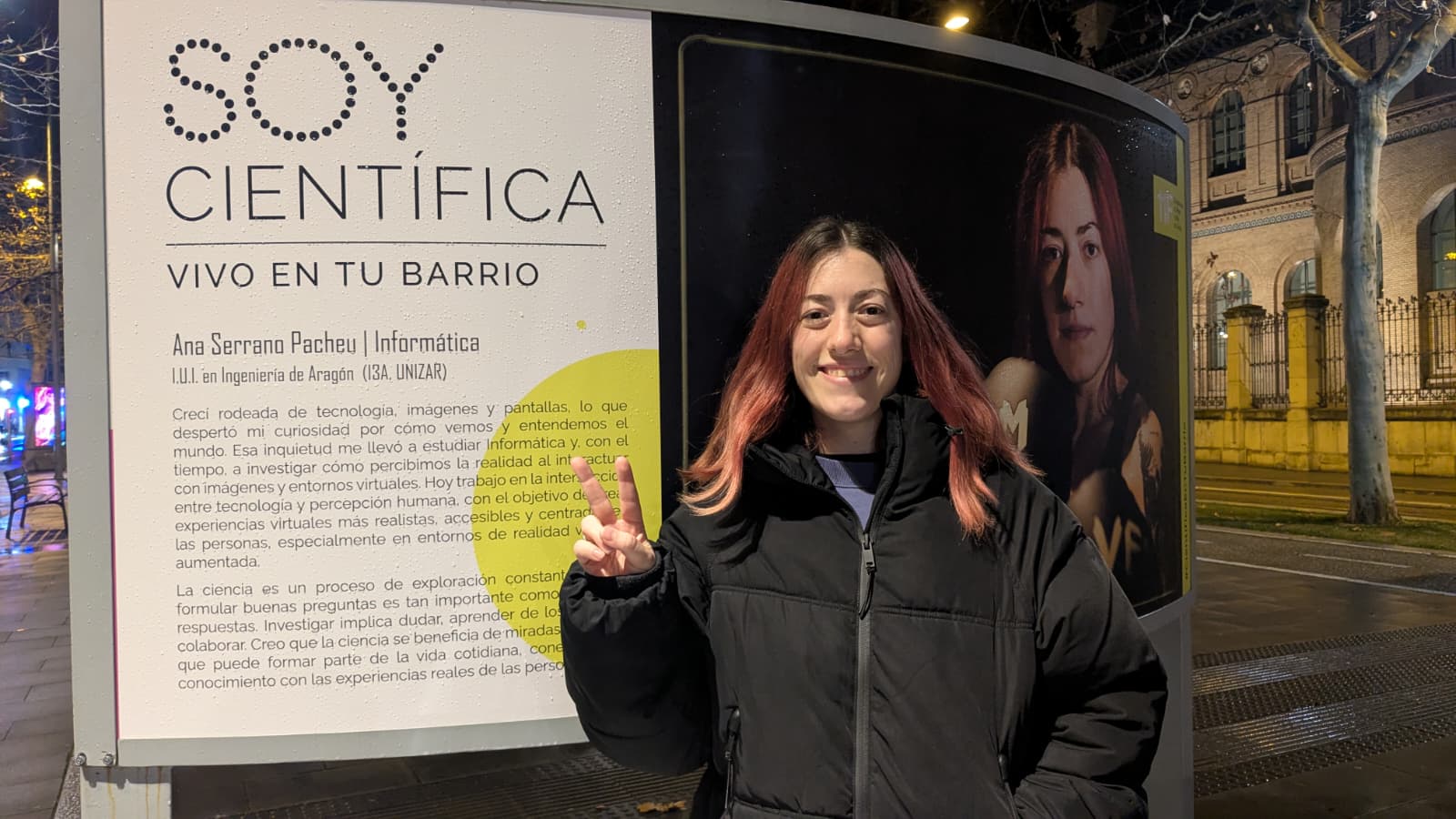
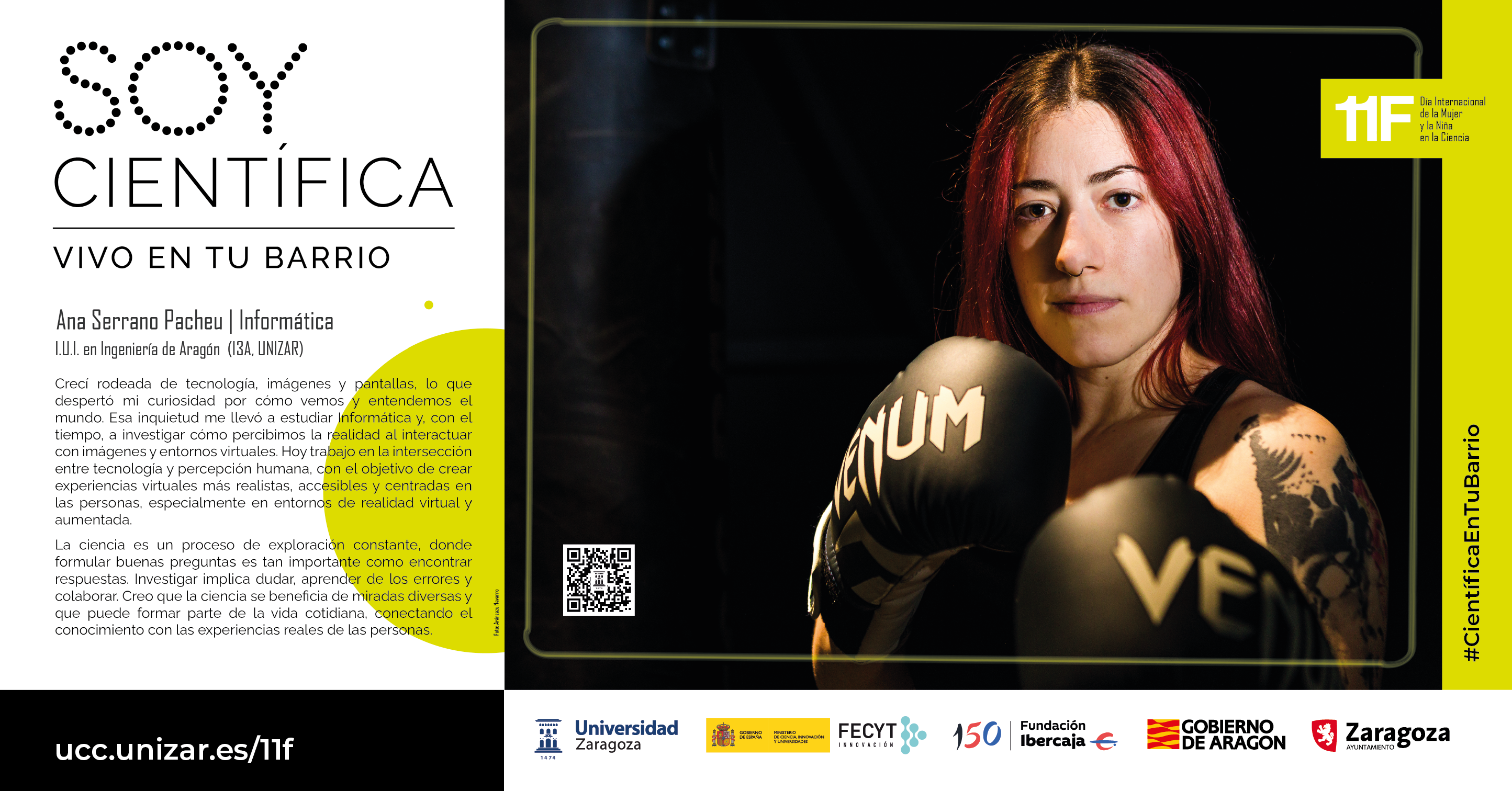
‘I am a scientist. I live in your neighbourhood’ is promoted by the Vice-Chancellor's Office for Scientific Policy and the Scientific Culture Unit of the University of Zaragoza. It shows 12 female researchers outside their laboratories and work areas, carrying out everyday activities. This year, photographer Aránzazu Navarro was commissioned to capture these images, which have resulted in an exhibition that can be visited on Gran Vía (next to the Paraninfo) throughout the month of February.
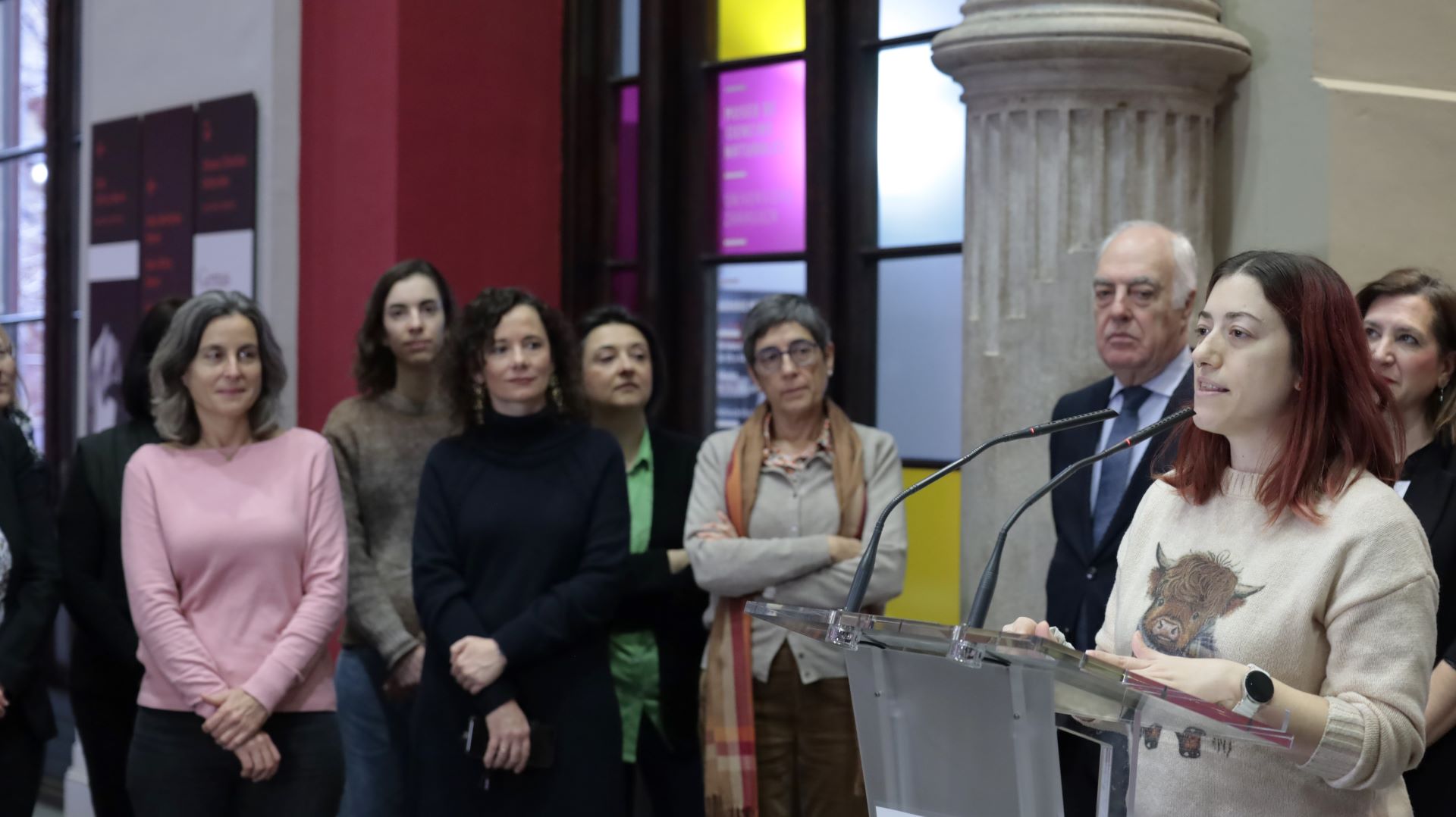
Ana Serrano Pacheu is one of the 12 researchers involved in this campaign, representing the I3A, and she was responsible for speaking at the presentation ceremony in the Unizar Auditorium. ‘This campaign allows us to show that we are not idealised portraits but real people who research, work, think, make mistakes and continue to learn, from very diverse disciplines, but with a common goal: to generate knowledge.’ She also welcomed the fact that science is being taken to the streets, ‘it is a way of connecting this work with institutions and society, and of reinforcing the idea that investing in research is investing in the future.’
Ana Serrano grew up surrounded by technology, images and screens, ‘which sparked my curiosity about how we see and understand the world. That curiosity led me to study computer science and, over time, to investigate how we perceive reality when interacting with images and virtual environments.’
He studied Telecommunications Engineering at the University of Zaragoza and is now part of the Graphics and Imaging Lab research group at I3A Unizar. He works at the intersection of technology and human perception, with the aim of creating more realistic, accessible and people-centred virtual experiences, especially in virtual and augmented reality environments. Last year, he was awarded a prestigious Starting Grant from the European Research Council (ERC), which will enable him to consolidate a group of excellence in perception and XR technologies in Aragon and develop his research over a period of five years. This type of research has applications in areas such as training, simulation, information visualisation and the design of more intuitive interfaces.
For Ana Serrano, science ‘is a process of constant exploration, where asking good questions is as important as finding answers. Research involves doubting, learning from mistakes and collaborating. I believe that science benefits from diverse perspectives and that it can be part of everyday life, connecting knowledge with people's real experiences.’
Regarding the presence of women in science and the development of research careers, she emphasises that a research career ‘is exciting, but also demanding. For many years, it is marked by instability, pressure to demonstrate results and the difficulty of balancing personal life with scientific work’. She points out that women continue to be underrepresented in technological fields, especially as they advance in their careers. Even so, ‘I believe that having diverse role models and highlighting different career paths is key to encouraging more people to consider science as a real and accessible option.’
Women in science
The initiative ‘I am a scientist. I live in your neighbourhood’ aims to contribute to the objectives of 11 February, to vindicate the role of women in science and break the gender gap.
There is an upward trend in women's leadership in research. However, it is still insufficient, as the percentage of women leading research projects is less than 40%, standing at 35.58% on average, with a greater imbalance in Engineering, where only 26.24% of women lead projects. This situation contrasts with that observed in the macro-areas of Health (50.32%); Humanities (41.98%); Social Sciences (41.64%) and Sciences (38.36%).
Ten years ago, the percentage of projects led by women was almost 10 points lower than it is today (26.04% compared to 35.58%).
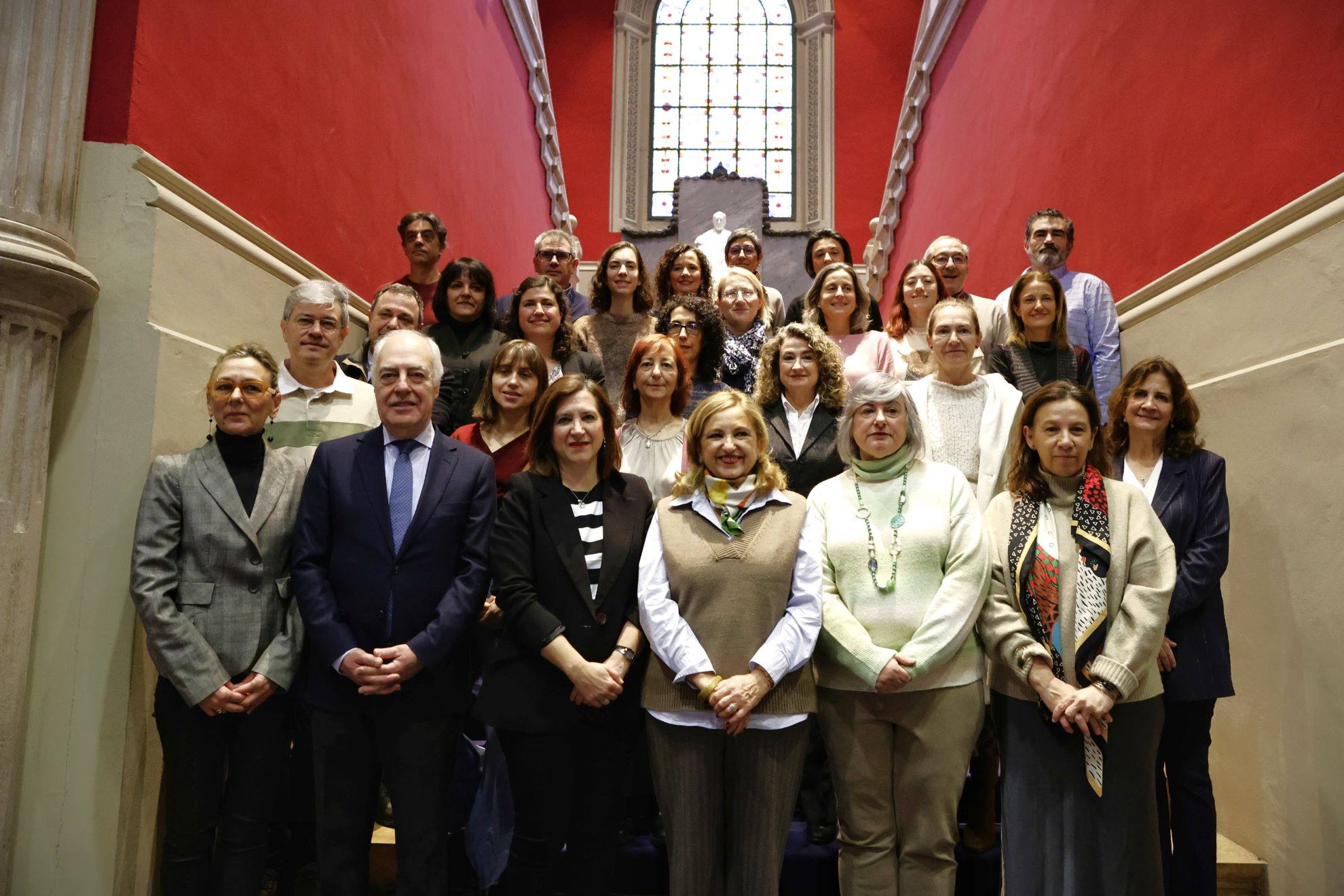
The presentation ceremony was led by the Vice-Chancellor of the University of Zaragoza, Rosa Bolea; the Vice-Chancellor for Scientific Policy, Pilar Pina; the Councillor for Culture, Education and Tourism of Zaragoza City Council, Sara Fernández; and the Director General of the Ibercaja Foundation, José Luis Rodrigo.
It has also received the support of Pilar Gayán, Director General of Science and Research for the Government of Aragon; Marisa Feijóo, Director General of Universities for the Government of Aragon; Ana Rosa Gaspar, Head of the Women and Equality Service for Zaragoza City Council; and the directors of the participating University Research Institutes.
Full details of the campaign and activities “Soy científica. Vivo en tu barrio”.
Link to YouTube - Presentation in the Paraninfo Hall: https://youtu.be/BI9M8vO9n4o