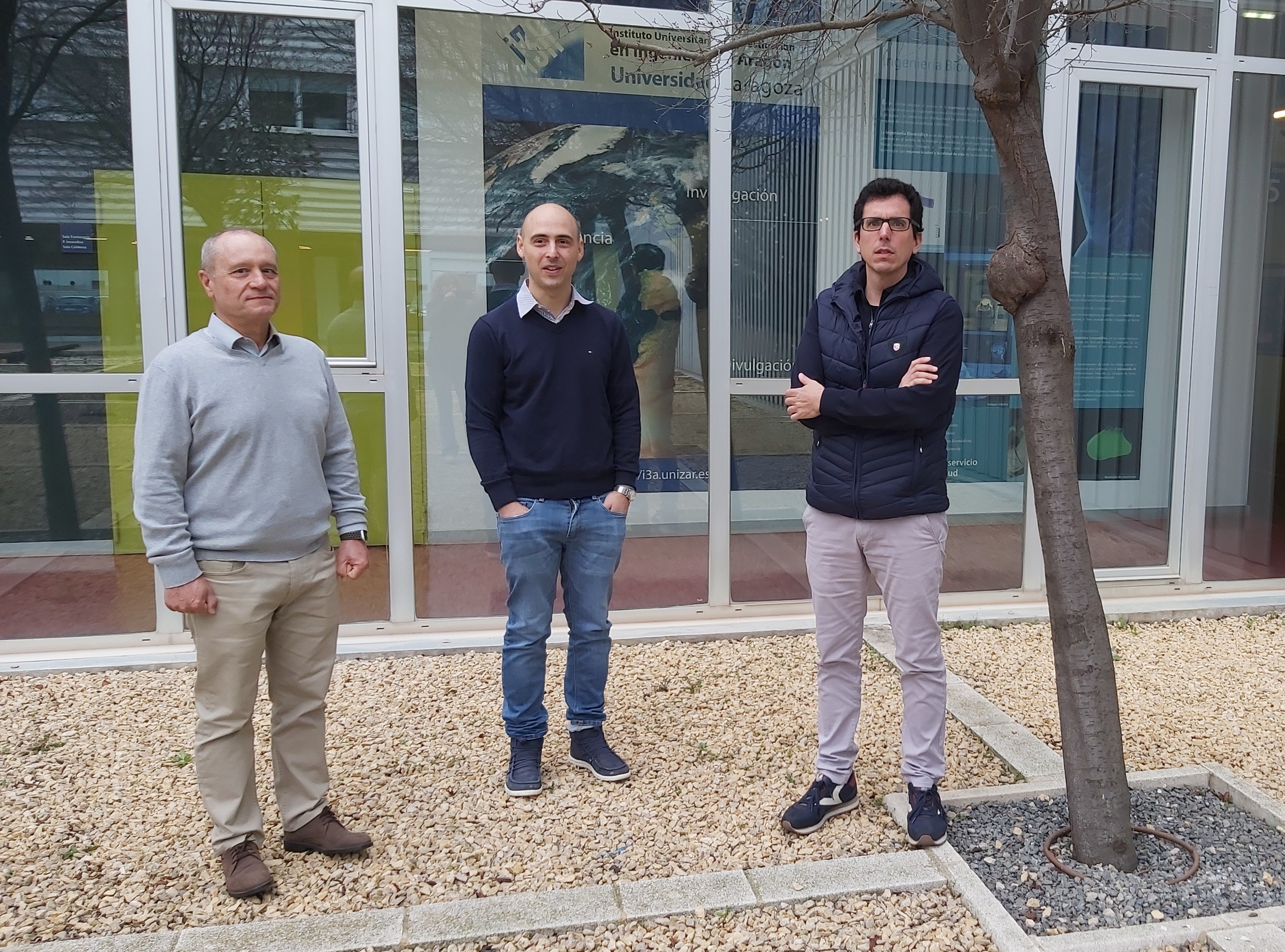
The Minister for Employment, Science and Universities of the Government of Aragon, Claudia Pérez Forniés, visited the Aragon Engineering Research Institute (I3A) at the University of Zaragoza this morning, where she met with the centre's director, Jesús Arauzo, and postdoctoral researchers, who explained some of the projects they are working on.
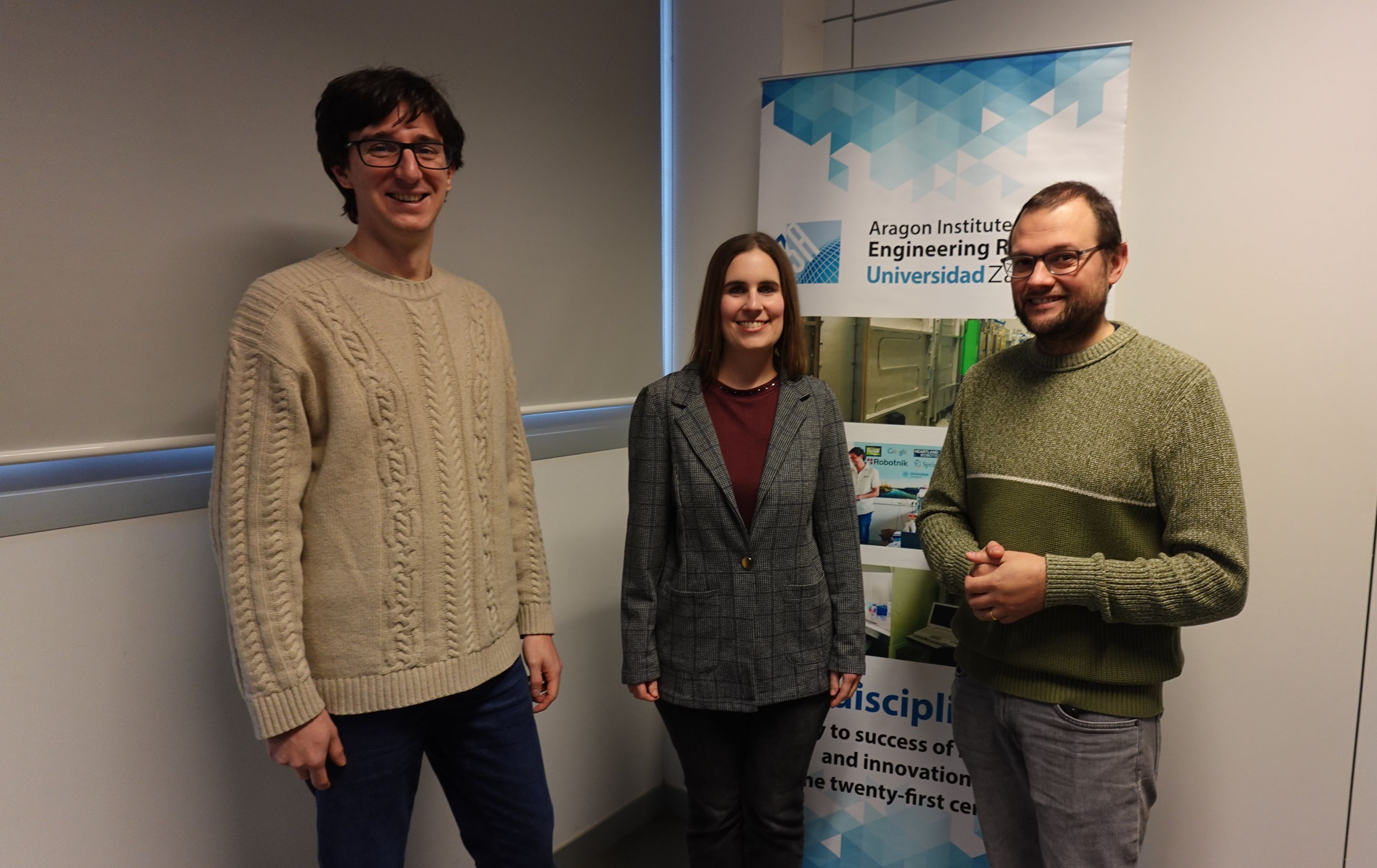
At the meeting, the minister, who was accompanied by the Director General of Science, Pilar Gayán, and the Vice-Chancellor for Scientific Policy at the University of Zaragoza, Pilar Pina, and was able to see first-hand the work being done by three of the four postdoctoral researchers who joined the Institute after the first call for grants from the Government of Aragon, ‘Odón de Buen’, for the two-year hiring of young doctors. They are Darío Alvira, Laura García Mendivil and Pau Urdeitx, all three graduates and doctors from the University of Zaragoza, who are developing their projects on energy storage, coronary research and digital twins, respectively. As they mentioned at the meeting, these researchers have decided to stay in our autonomous community.
What do you research?
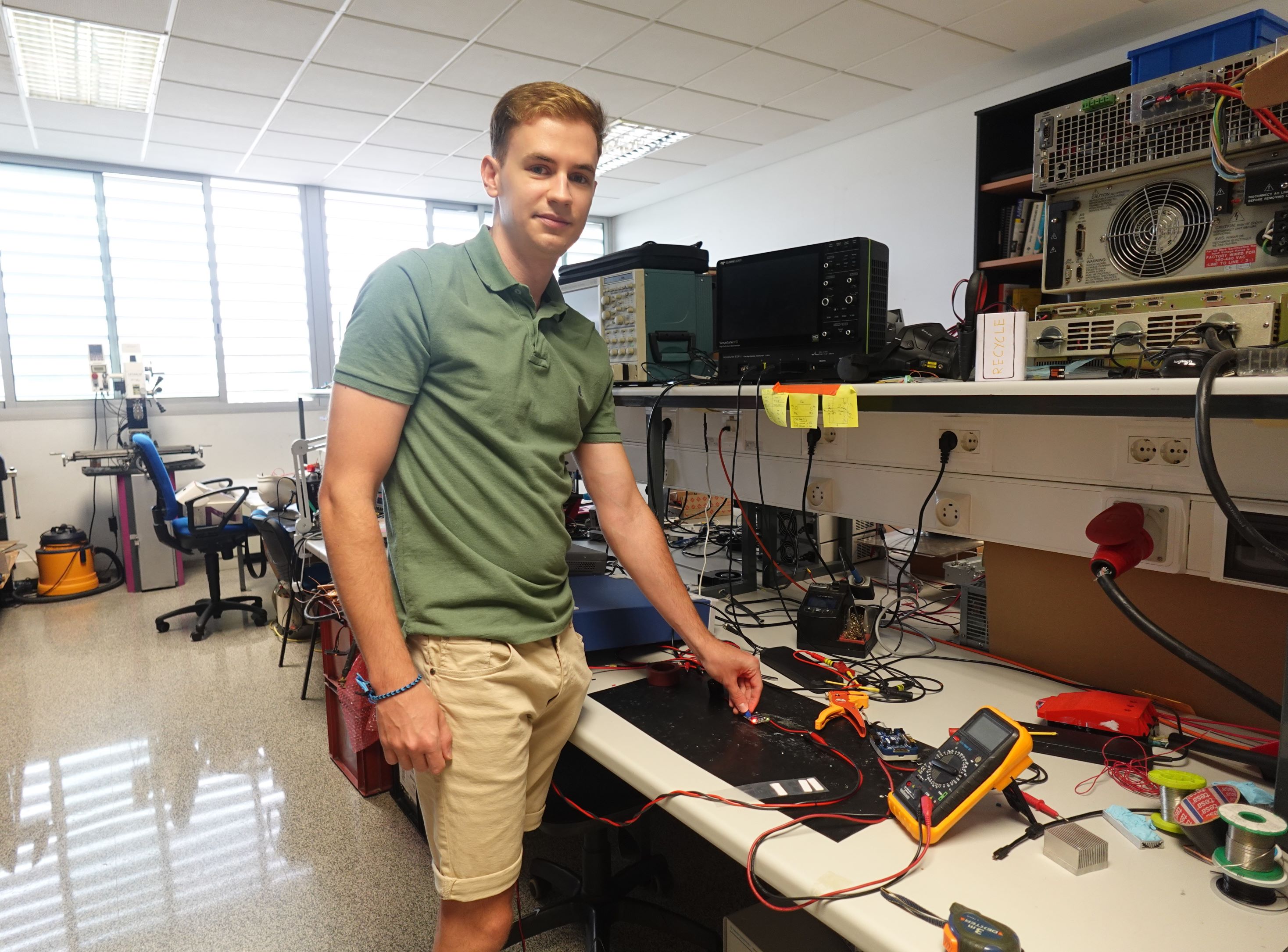
Darío Alvira (Thermochemical Processes Research Group, GPT)
Sustainable carbon electrodes for integration into advanced energy storage devices.
- Production of carbon electrodes from lignocellulosic agricultural waste.
- Production of self-supporting electrodes by electrospinning lignin nanofibres.
- Integration of carbon electrodes into optimised electrolytic systems for sodium-ion batteries and hybrid zinc-ion batteries and supercapacitors.
Laura García Mendivil (Biomedical Signal Interpretation and Computational Simulation Group, BSICoS)
Development of robust non-invasive markers to stratify the risk of sudden cardiac death in patients with type 2 diabetes mellitus.
- Electrophysiological and immunohistochemical characterisation of remodelling induced by type 2 diabetes mellitus in human ventricles.
- Integration of experimental results into computational models of human ventricular electrophysiology for the study of arrhythmic risk associated with type 2 diabetes mellitus.
- Evaluation of the manifestations of type 2 diabetes mellitus in the ECG and development of indices for the stratification of patients with type 2 diabetes mellitus according to their risk of sudden cardiac death.
Pau Urdeitx (Applied Mechanics and Bioengineering Group, AMB)
Physics-informed strategies and inductive biases for Cognitive Digital Twins
- Development of cognitive digital twins with adaptive learning structures based on physical principles and optimisation techniques.
- Improvements in the efficiency of artificial intelligence models through the implementation of geometric neural networks, in order to ensure scalability and robustness in the simulation of complex systems.
- Exploration of new formal approaches for incorporating inductive biases into learning models, with a special emphasis on thermodynamics and underlying physical principles.
Lee Seog Hung (Robotics, Computer Vision and Artificial Intelligence Group, RoPeRT). Currently staying at the University of Leuven.
His research focuses on the fundamentals and practical application of multiview geometry, visual SLAM, and Structure-from-Motion reconstruction.
- Vision-based algorithms for autonomous ground/air vehicles
- 3D scene reconstruction
- Augmented reality/virtual reality (AR/VR) on mobile platforms
Its goal is to advance visual perception systems that are not only accurate, but also geometrically meaningful, robustly reliable, and practically reliable across the spectrum of real-world conditions.
Attracting talent
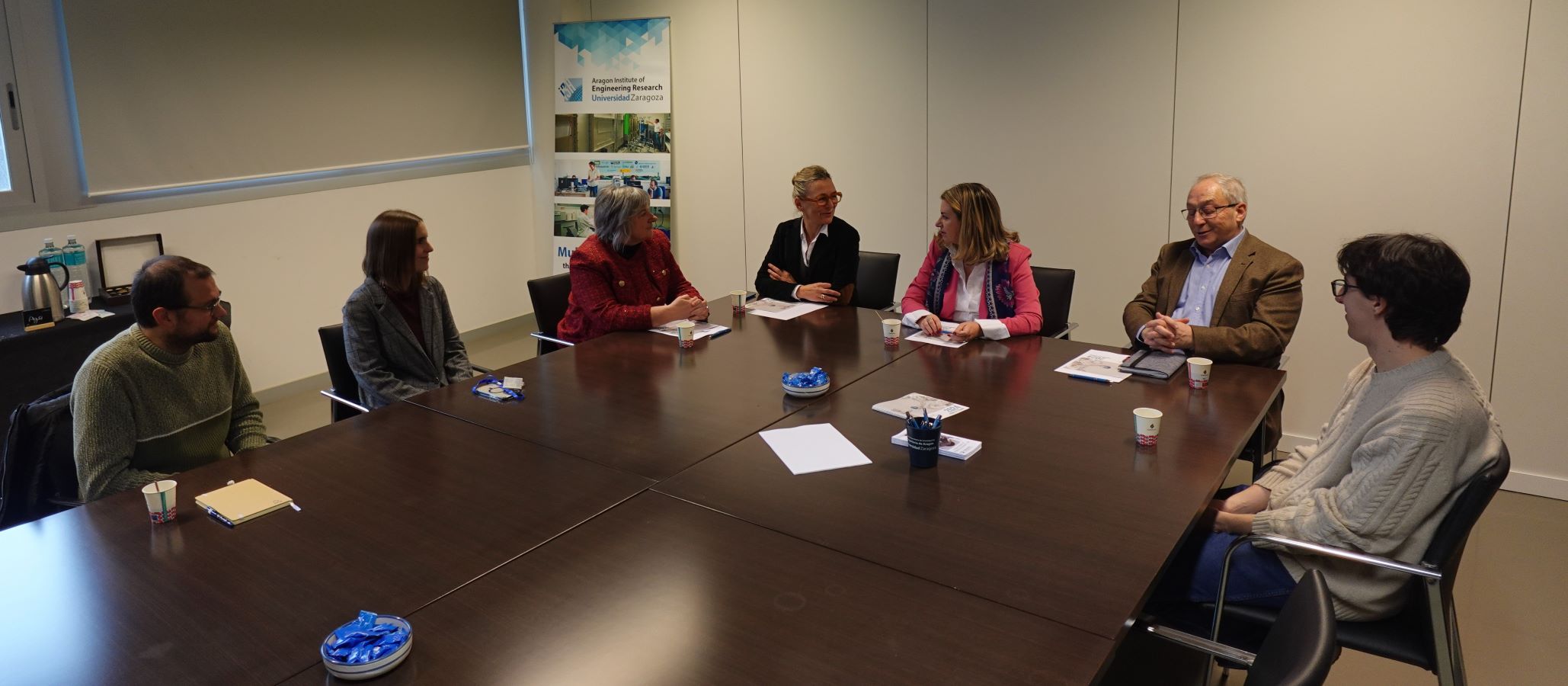 Councillor Pérez Forniés emphasised the importance of talent trained in Aragon remaining in Aragon to practise science that will transform society. ‘It is very important to give researchers a stable framework, promote the continuity of their training and help them to create a life project.’
"Retaining talent, internationalisation and transferring research results are key. Science would be useless if it did not leave the laboratories and reach the streets, the market,‘ said Claudia Pérez Forniés, referring to what she had been told during the visit. ’This centre was created with an international vocation, and according to the management, it is achieving this, because every day more and more people from outside want to come to Aragón to do research, attracted by the groups of excellence we have here."
For his part, the director of I3A, Jesús Arauzo, expressed his gratitude for the visit and the support to ‘consolidate and retain young research talent’. In this regard, he stressed that initiatives such as the Odón de Buen programme ‘are extremely positive for the R&D&I system’ and, furthermore, ‘are aligned with the work we do at I3A, where we are always open to implementing lines of action that pave the way for young people who want to pursue a research career in Aragon.’
The I3A is a benchmark in engineering research, whose mission is to promote high-quality research, from basic research to prototype design, contributing to regional, national and international economic development through collaboration with companies.
After the meeting, representatives from the Government of Aragon and the University of Zaragoza visited the Circular Economy Laboratory and the Robotics, Computer Vision and Artificial Intelligence Laboratory.